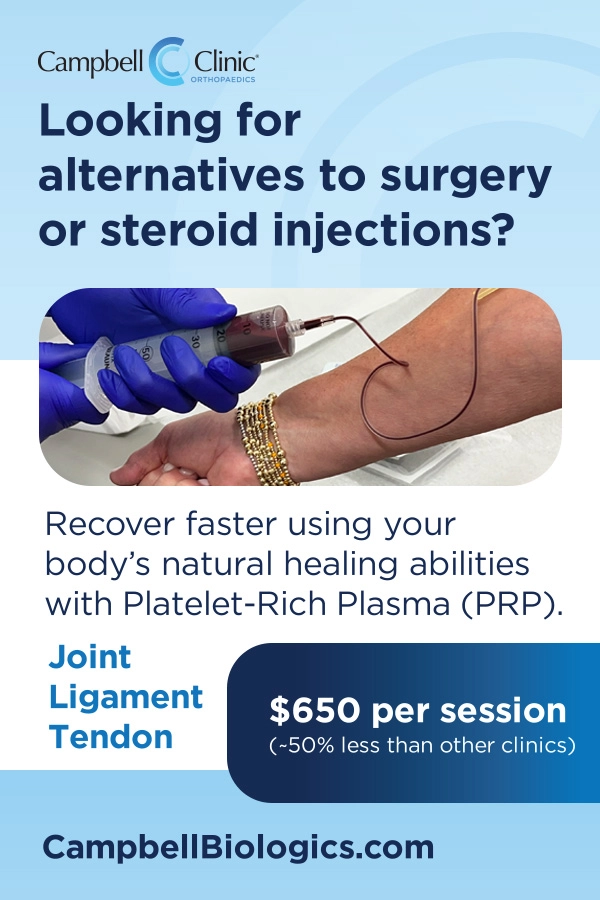

Regenerative medicine is reshaping how orthopedic specialists address injuries and chronic pain, with treatments like Platelet-Rich Plasma (PRP) and stem cell therapy leading the way. These approaches fall under orthobiologics, or biological substances used to enhance the body’s natural healing processes. We spoke with Dr. Kristina Quirolgico at Campbell Clinic Orthopedics to learn more about these therapies and how they will impact the future of healing.
How It Works
PRP is derived from a patient’s own blood, which is spun in a centrifuge to isolate the platelet-rich portion. Packed with growth factors, this concentrate is then injected, often under ultrasound guidance, into the affected area. While the first two weeks after treatment can bring increased soreness, patients are counseled to allow six to eight weeks to see improvement.
Stem cell therapy, while often discussed alongside PRP, is more restricted in orthopedic use. Currently, only two types are FDA-approved: bone marrow aspirate concentrate and microfragmented adipose (fat) tissue. These cells are not manipulated, but are used to create a better healing environment, reducing chronic inflammation rather than regrowing tissue.
Conditions Treated
PRP is frequently used for mild arthritis, especially in the knee, and for tendon issues such as tennis elbow. Stem cell therapies are often considered for knee arthritis and other joint degeneration, especially in patients seeking options to pursue prior to or instead of surgery.
Effectiveness and Considerations
These treatments are unique in that they rely on the patient’s own body for healing. While these therapies cannot regenerate or regrow tissue outright, they provide a more favorable environment for the body to reduce chronic inflammation and induce healing.
Results vary based on age and overall health of the patient, as well as the severity of the condition being treated. Younger, healthier patients tend to respond better, while smoking, diabetes, and advanced arthritis can limit outcomes. These treatments are generally safe as they use the patient’s own cells, but are not currently covered by insurance, making cost a factor.
Role in Recovery
While PRP and stem cell injections can reduce pain and promote healing, they do not prevent reinjury. Physical therapy and ongoing movement remain essential for maintaining joint health and function.
Looking Ahead
Dr. Quirolgico and many other experts believe regenerative treatments will become more refined and widely used over the next decade. Because the body’s own cells are used, the risk of adverse reactions is low, making these therapies a promising, conservative option for patients looking to restore their health and promote longevity.
Interested in learning more? Visit Campbellclinic.com to see the available services or call 901.759.3111 to book an appointment with Dr. Quirolgico.
Dr. Quirolgico specializes in Sports Performance, Arts Medicine, and Physical Medicine and Rehabilitation. She sees patients at the following locations: 1900 W. Poplar Avenue, Collierville, and 7887 Wolf River Blvd, Germantown.
By Zoe Harrison