In plain terms, what is PRP, and what are you actually separating out of someone’s blood?
PRP stands for platelet-rich plasma. We draw a small amount of the patient’s own blood and process it to concentrate the plasma containing platelets and growth factors, separating it from the red blood cells and platelet-poor plasma.
PRP has been called “liquid gold” for years — and for good reason. It can be used in liquid form or processed into a more concentrated, filler-like product for natural rejuvenation.
Why combine PRP with microneedling, and what does adding PRP change?
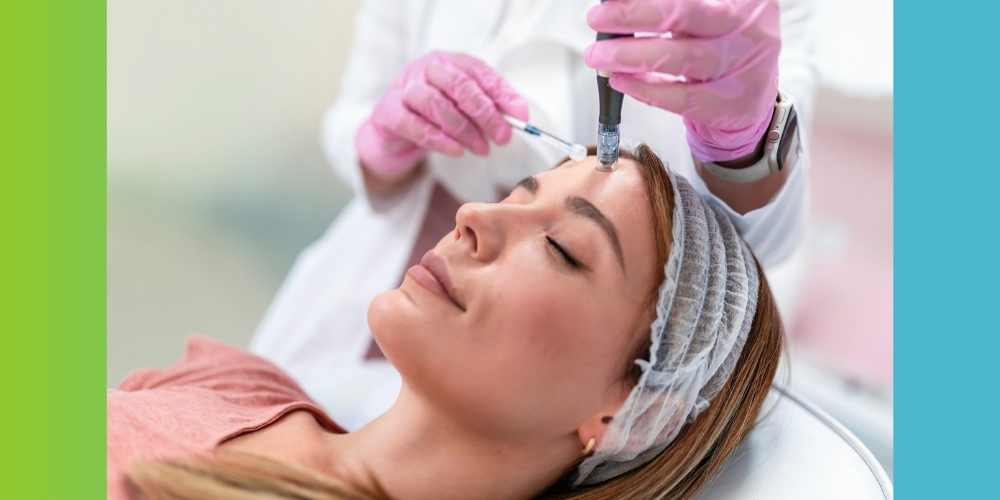
Microneedling alone is wonderful for improving fine lines, texture, tone, acne scarring, and pigmentation. It creates controlled microchannels that stimulate the skin’s natural repair process. Adding PRP introduces the patient’s own concentrated platelets and growth factors directly into those channels, enhancing that regenerative response. The result can be healthier-looking, brighter, more even, and luminous skin. We can also inject PRP strategically, including under the eyes for patients concerned about dark circles.
People are also hearing about PRF now. What’s the difference between PRP and PRF, and do you prefer one?
PRP and PRF both use components of your own blood but are processed differently. PRF creates a fibrin matrix that can release growth factors over time. I don’t see one as replacing the other — they are tools we select based on the patient’s goals. We use a system called Derma PRP that allows us to create a natural, filler-like regenerative treatment. I also combine regenerative treatments with hyaluronic acid fillers or biostimulators when appropriate.
What concerns does microneedling with PRP work best for — and what won’t it fix?
It’s excellent for fine lines, uneven tone and texture, pigmentation, acne scarring, and overall skin quality. It won’t replace lost volume or completely correct deeper folds or significant laxity. Those concerns may require fillers, biostimulators, energy-based treatments, or combination therapy. PRP microneedling can be a beautiful standalone treatment or part of a larger plan.
Walk us through a typical appointment. What should a patient expect?
We draw a small amount of blood and process it while the patient relaxes with topical numbing cream. Once prepared, we perform microneedling and apply the PRP throughout the treatment. Depending on the plan, we may also inject PRP into areas such as scars or under the eyes. From start to finish, patients can generally expect about an hour.
How many sessions does someone realistically need, and when should they see results?
Patients can see improvement after one treatment, with changes beginning within a few weeks as the skin’s regenerative process continues. Depending on age, skin condition, and goals, a series may provide more transformational results. I individualize the number and spacing rather than giving everyone the same protocol.
Is PRP worth the additional cost over traditional microneedling?
I believe most appropriate candidates can benefit from PRP, but that doesn’t mean every patient needs the same treatment. My job isn’t to tell everyone they need PRP — it’s to determine which treatment or combination gives that individual the best outcome. One thing I love about microneedling with PRP is that all skin tones can benefit.
Who is — and isn’t — a good candidate?
Good candidates are generally healthy patients with realistic expectations. Hydration and overall health can affect the blood sample and platelet concentration. Certain medications, including blood thinners, and some medical or skin conditions may affect candidacy, which is why consultation and medication review are important.
What’s the biggest misconception about PRP, and what do you wish every patient knew?
The biggest misconception may be expecting regenerative aesthetics to be a “one-and-done” solution. One treatment can create visible improvement, but our skin continues to age and change. I look at regenerative aesthetics as a journey — using your own biology alongside established treatments to support healthier skin over time.
At De La Belle, we treat the whole person and build a plan around the patient, not a single procedure. The goal isn’t to change how you look; it’s to help your skin look and function at its best, naturally.
For more information, visit Delabelle.net or call 901.459.3338.
By Renee Pinlac, MSN, FNP