People are living longer, staying active later in life, and expecting their bodies to keep up; however, joint pain, inflammation, and injuries can make that difficult. The good news? Advances in minimally invasive treatments are helping people recover faster, move better, and avoid major surgery in many cases. We spoke with interventional radiologist Dr. Michael Doherty about the latest options for treating pain in the knee, back, shoulder, and foot, and how these procedures are helping patients get back to doing what they love with less downtime.
What are the most common pain issues you see in people who work out regularly or want to stay active?
One of the biggest issues I see is inflammation-related pain — especially in active adults who want to keep moving but are limited by joint pain, back pain, or overuse injuries. A lot of patients also deal with arthritis, tendon injuries, plantar fasciitis, or back pain caused by compression fractures.
The good news is that many of these conditions can now be treated with minimally invasive, outpatient procedures, such as arterial embolization and kyphoplasty, which can reduce pain, improve mobility, and help people get back to the activities they enjoy — often without major surgery or a long recovery.
What exactly is embolization?
Embolization is a minimally invasive procedure used to treat pain, inflammation, and other conditions by blocking abnormal blood flow in targeted areas of the body. Using advanced imaging guidance, tiny particles are delivered through a small catheter to reduce inflammation and relieve symptoms — often without the need for surgery.
For many patients, embolization can mean less pain, faster recovery, and a quicker return to normal activities.
Once you have these procedures, how long does relief last?
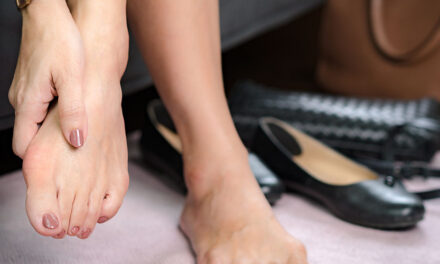
Unlike steroid injections, which often need to be repeated every few months, these procedures are designed to deliver longer-lasting relief. For plantar fasciitis, my goal is for the patient never to do it again.
With the artery embolization in the knee, you can get a durable result of six to 12 months of pain improvement. You can have it done again if you need to, which is fair considering that a steroid injection will give you four to six weeks.
For procedures of the knee, shoulder, back, and foot (plantar fasciitis), what is the downtime afterward?
The downtime from these procedures is minimal. Patients can be up and moving around very quickly afterward.
For the back (kyphoplasty), patients are up and feeling better that afternoon.
For the knee and any arterial case, we ask them to take it easy for a couple of days, and that is just related to the arterial puncture. After that, they can test it out and move forward as they wish!
The embolization isn’t like kyphoplasty, where you’re better right away, or a pain injection, where you’re better right away. It takes a couple of weeks to a month for all that neovascularity to sort of go away, and for the swelling and inflammatory pain to get better.
How do you, as an Interventional Radiologist, offer these treatments differently from other specialists?
I’m biased, but I think interventional radiologists use imaging in the best and most efficient way. There are surgical approaches that may be necessary, and some surgeons offer some of these minimally invasive options, but I was trained specifically to use these imaging tools.
Does insurance cover these procedures?
Yes, these procedures are usually covered by most insurances.
Any final advice for our readers?
Stay active! More and more research shows that maintaining lean muscle mass is one of the best things you can do for longevity and overall health. Whatever helps you keep moving safely is worth pursuing.
For more information on these procedures, visit Westcancercenter.org/pain-and-disease-management
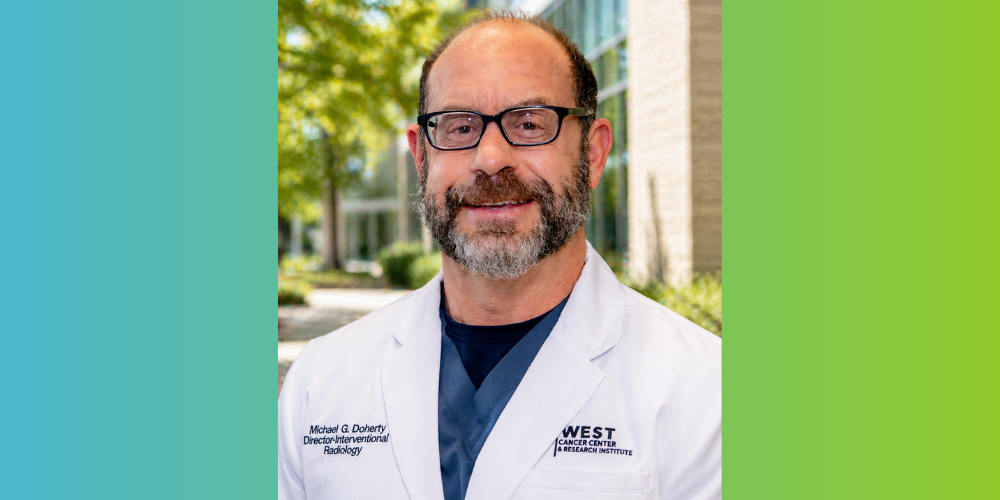
Dr. Michael Doherty is an accomplished interventional radiologist with nearly 20 years of clinical experience specializing in minimally invasive image-guided procedures. He currently serves as Director of Interventional Radiology at West Cancer Center & Research Institute where he is helping expand innovative, non-cancer treatment options and wellness-focused procedures for patients across the region.