
You trained for months. You sacrificed sleep, your social life, and the ability to walk down the stairs without groaning. Race day arrived, and something went sideways anyway. It happens to the most fit athletes from time to time. So here are the five most common culprits and how to prevent them.
1. POOR NUTRITION STRATEGY
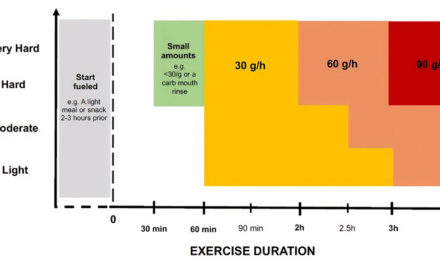
Your digestive system also has opinions about race day, and ignoring them is a fast track to a very long day. During hard exercise, blood gets redirected away from your gut to your working muscles, making it far less efficient at processing food. So avoid too much fat, protein, or fiber, as they are more difficult to digest. Glycogen stores last roughly 90–120 minutes at race intensity — after that, you’re running on fumes. So carbohydrate intake is paramount. A simple rule of thumb: aim for 30g of carbohydrate per hour for shorter efforts under 90 minutes, 60g per hour for moderate-length events, and up to 90g per hour for long efforts — provided you’ve trained your gut to handle it. Whatever your plan is, practice it in training, start fueling earlier than feels necessary, and never try something new on race day. This should not require explanation, yet every race has port-a-johns full of people getting that friendly reminder.
2. POOR HYDRATION STRATEGY
Dehydration is sneaky. By the time you feel thirsty, you’re already behind. Even a 2-3% loss in body weight from sweat measurably hurts performance. But here’s the twist: over-hydration is a real problem, too. Drinking too much plain water without replacing sodium can cause hyponatremia — your blood sodium drops, cells swell, and you end up in the medical tent for the opposite reason. Sweat isn’t just water — it carries sodium with it, and that sodium loss contributes to cramping, brain fog, and late-race zombie walks. The goal isn’t simply to drink enough; it’s to replace what you’re actually losing. Know your sweat rate and your sweat sodium concentration (which can be tested), and prioritize sodium replacement. Most people who use the right sports drink for them can drink to thirst and are just fine.
3. UNREALISTIC EXPECTATIONS — ESPECIALLY ON A FIRST ATTEMPT
So you have a very specific goal time based on an influencer who did it, what you did for a shorter event, or your most optimistic projection after a suspiciously good training week. Here’s the uncomfortable truth: you simply cannot race faster than you trained. It’s rare for someone to outperform their training. Your fitness has a ceiling, and that ceiling was built in training. Athletes who go in chasing a number they can’t support tend to make early decisions that cost them dearly later. Treat your first race, at any distance, as a data-collection event. Define success by execution quality. Did you nail your nutrition, manage your effort, and stay composed when it got hard? The PR comes later, once you know what you’re actually dealing with. Athletes take years to learn how to actually race a specific distance in any given sport. Expectations can take all the joy out of the experience.
4. LIFE STRESS LEADING INTO AN EVENT
Your body cannot tell the difference between a hard interval session, a brutal week at work, or the heavy load of a sick relative. To your nervous system, stress is stress — and it all draws from the same account. Cortisol suppresses immune function, disrupts sleep, and impairs glycogen replenishment, which your taper week is supposed to accomplish. Do your best to reduce life stress during the week, especially the last three days leading up to any goal event. Don’t leave race logistics up to the last minute. Don’t put yourself on a tight timeline. If you can keep it relatively chill, your fitness will do the talking on race day.
5. GOING OUT TOO HARD
This is the most universal mistake in endurance sport, and it has been destroying races since the dawn of time. You feel great at the start. Of course you do, you tapered. But when you exceed your aerobic threshold early, lactate accumulates, glycogen burns faster, and the debt you create must be repaid later, with interest. Race your plan. A power meter, a GPS watch, whatever your tool of choice, exists in part to protect you from your own enthusiasm. Use them to regulate your early effort. You can always drop the hammer in the final stretch if you feel good. But understand that the athlete who passes you in the first mile and the one who passes you in the last are having very different days.
Dale Sanford is the co-founder of BPC Performance, Inc. and has been coaching individuals and athletes all over the world since 2009. You can catch up with Dale @bpcperformance on IG, or listen to the Coaches on Couches Podcast. If you’d like to start your health or sports performance journey with BPC, visit Buildpeakcompete.com
By Dale Sanford, Performance Coach